Automotive & Luxury Transportation
The Three Seconds That Win or Lose the Booking
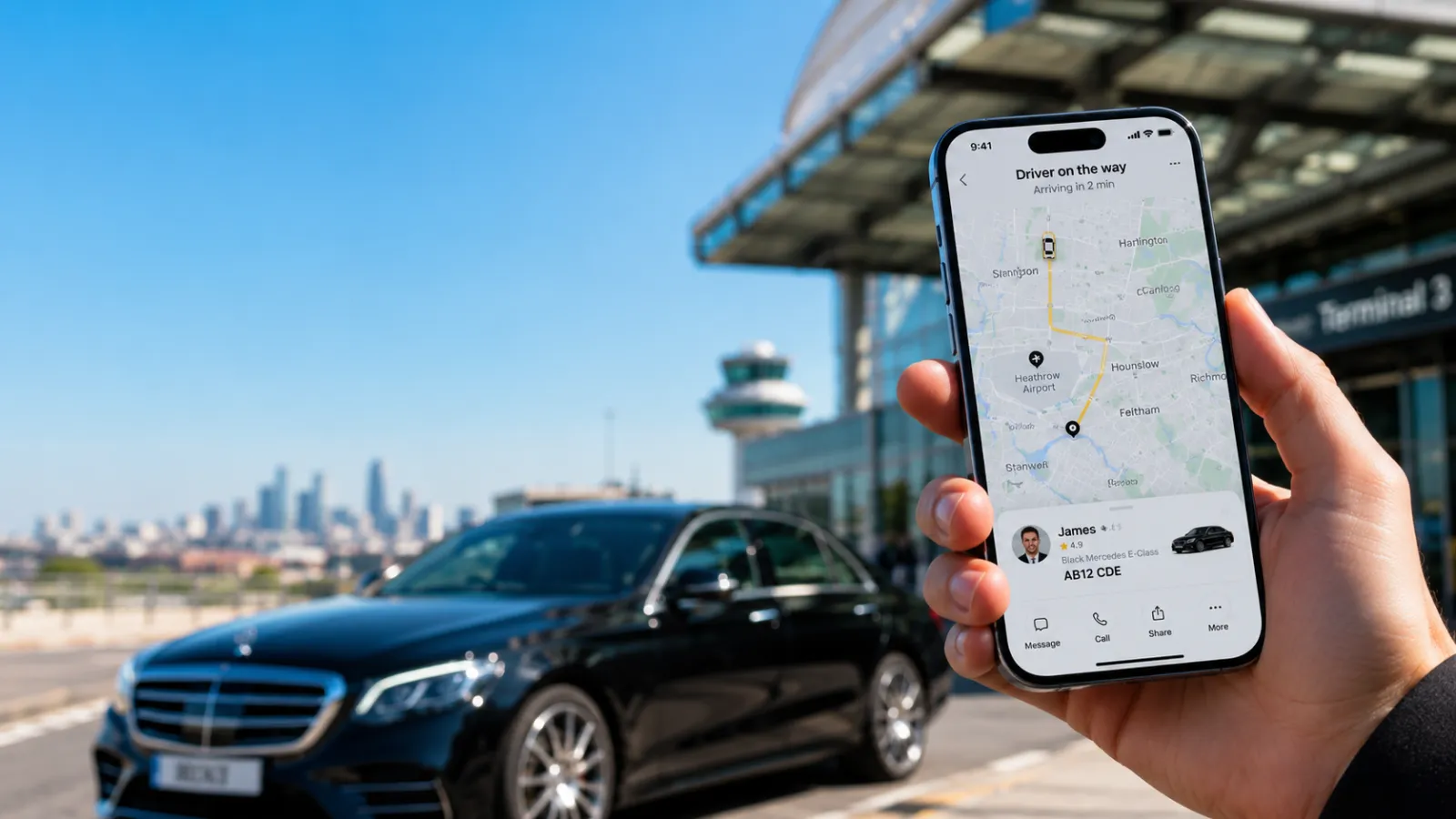
There is a critical three-to-five-second window after a potential customer clicks the booking button on a private transfer website. According to the article, what customers encounter during that moment can determine whether they complete a reservation or leave and book elsewhere.
The article argues that friction is a major cause of abandoned bookings. Customers who have already chosen a premium, pre-booked transfer are often not leaving because of price, but because the booking process is more complicated than expected.
The Booking Form Problem
Private transfer booking forms can contain numerous fields added for operational reasons, including vehicle preferences, luggage details, return-trip information and account registration. When these requirements accumulate, the booking experience can feel unnecessarily complicated.
The article recommends structuring the booking process around the customer's natural decisions. Instead of requiring numerous steps before displaying a price, a simpler process can focus first on the origin, destination and timing, while collecting secondary information later.
What Intuitive Actually Means
An intuitive booking system should make the next step obvious to the customer. The article contrasts forms organized around the business's information requirements with experiences designed around the customer's mental model.
Speed is also important. The article notes that slow page loads and multi-step transitions can reduce conversions, particularly on mobile devices. Customers booking transportation from their phones may abandon a slow checkout and contact the operator through WhatsApp instead.
The Rise of Conversational Booking
WhatsApp has become an important booking channel for private transfer operators, particularly in emerging and mid-sized markets. Customers can describe their transportation needs in a message and receive availability, pricing and payment instructions without navigating a lengthy web form.
The article argues that operators should not necessarily replace online booking systems with WhatsApp. Instead, web booking should adopt the same qualities that make conversational booking effective: speed, personal interaction, direct communication and low friction.
Mobile-First Is Not Optional
The article emphasizes the importance of mobile booking because a large share of initial ground transportation searches takes place on mobile devices. It describes a gap between mobile searches and completed bookings as evidence that some customers encounter booking experiences that are difficult enough to make them switch to desktop.
Recommended technical features include booking forms that work on narrow screens, touch-friendly fields, mobile-compatible calendar pickers and payment options such as Apple Pay and Google Pay where appropriate.
Response Time as a Conversion Factor
For operators whose online inquiries require human confirmation, response time can significantly affect whether an inquiry becomes a booking. The article states that the probability of completing a booking drops by more than 50 percent when the response takes longer than five minutes.
Possible solutions include automated acknowledgment emails, clear response-time commitments, rapid human responses during busy periods and responsive WhatsApp channels.
A Market Where This Has Made a Measurable Difference
The article highlights Albania as an example of a growing tourism market where international travelers have increased expectations for pre-booking capability.
Tirana Airport Shuttle, which has operated private transfers from Tirana International Airport since 2021, is presented as an example of an operator using a straightforward online booking process alongside WhatsApp communication.
The article says the company has seen a clear relationship between improvements in booking simplicity and speed and the completion rate of initiated bookings. It also identifies the WhatsApp channel as one of the company's effective booking sources.
The Confirmation Is Part of the Product
The booking confirmation is described as an important part of the customer experience rather than merely an administrative output.
A confirmation containing the driver's name, a direct contact number, meeting instructions and the agreed fixed price can give customers greater confidence before their journey. By contrast, a generic receipt containing only a booking reference may create additional questions and uncertainty.
What Getting This Right Is Worth
The article argues that improving booking conversion can increase reservations without additional marketing spending, new routes or additional fleet capacity.
It gives an example in which increasing an online booking form's conversion rate from eight percent to twelve percent would represent a 50 percent increase in bookings.
The same principle applies to inquiry response times. If slow responses are responsible for a significant portion of inquiries failing to convert, improving response speed can represent a substantial revenue opportunity.
The article concludes that private transfer companies compete on trust, reliability and professional standards, but those qualities matter only after a booking has been completed. A fast, clear and simple booking experience is therefore essential to turning customer intent into an actual reservation.
Three seconds remain a critical window.
Journal
Latest news
View all
A Guide to the 9/11 Memorial & Museum
The 9/11 Memorial & Museum at the World Trade Center commemorates the victims of the September 11, 2001 attacks and the 1993 World Trade Center bombing, while preserving artifacts, personal stories and historical records for visitors.
Read More →
What Really Happens if You Don’t Switch Your Phone to “Airplane Mode” In-Flight
Air travelers in the U.S. are required to turn off cellular service during flights, while rules differ in other countries as airlines adopt newer connectivity technologies, including 5G and Starlink.
Read More →
ICYMI: It’s the End of an Era for an East Village Dumpling Shop
Mimi Cheng’s is closing its last New York City location in the East Village on September 11 after 12 years, as August brings a series of restaurant openings, closings, expansions, events, and other dining developments across New York City.
Read More →Related articles

Acura Nexera Vision Concept Previews the Next-Generation RDX Hybrid
Acura has unveiled the Nexera Vision, a two-seat sports car concept at Monterey Car Week that introduces the brand’s new design language. Although it will not enter production, its styling and lighting elements will influence future Acura models, starting with the next-generation RDX Hybrid.
Read More →
Someone Already Wrecked a 2027 Rivian R2 After Just 110 Miles
A 2027 Rivian R2 Performance Launch Package has reached a salvage auction after just 110 miles, with front-fender and suspension damage and multiple deployed airbags. The nearly new electric SUV could offer buyers a way around Rivian’s 2027 delivery backlog.
Read More →
MIT Study Finds EVs Cut Lifecycle Emissions by 40–60 Percent in Most Locations
A new MIT-led study published in Environmental Research Letters finds that battery-electric vehicles produce 40 to 60 percent lower lifecycle emissions than comparable gasoline cars in most U.S. locations, even where electricity grids rely heavily on fossil fuels.
Read More →