
Airports & Aviation
What Really Happens if You Don’t Switch Your Phone to “Airplane Mode” In-Flight
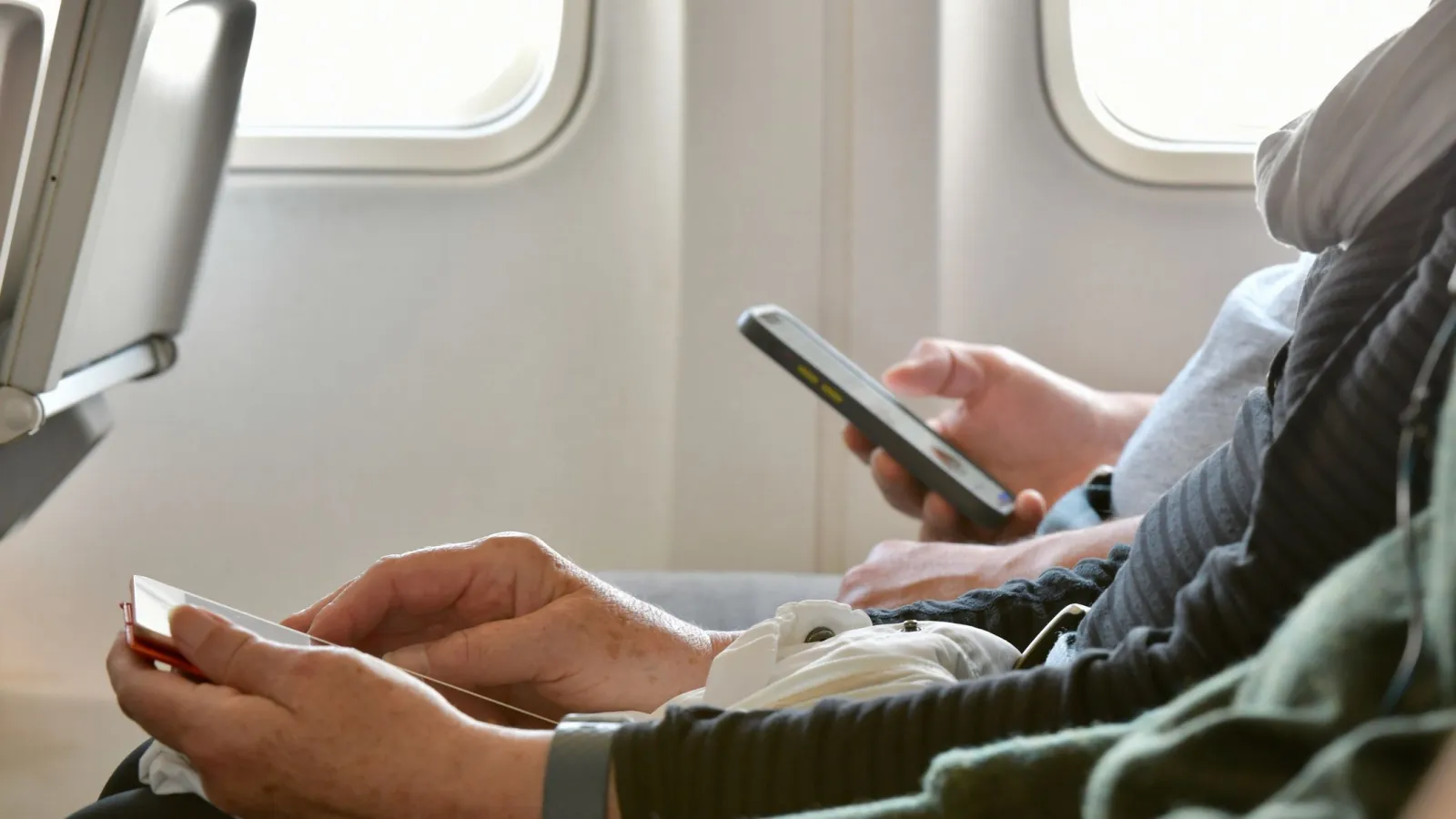
What Really Happens if You Don’t Switch Your Phone to “Airplane Mode” In-Flight
Air travelers in the United States are still required to switch their phones to airplane mode during flights. The rule remains in place even as other countries and airlines adopt newer technologies that allow passengers to stay connected in the air.
The article was originally published in 2023 and was most recently updated on August 28, 2026, with current information.
What Does Airplane Mode Do?
Airplane mode disables the wireless and cellular signals coming from a phone. On many devices, however, passengers can manually turn Wi-Fi and Bluetooth back on while keeping cellular service disabled.
Does Airplane Mode Save Battery?
Yes. A phone uses less power when it is in airplane mode, which can extend battery life and slightly speed up charging.
Why Do Passengers Have to Use Airplane Mode?
In the United States, the requirement is related to safety and possible interference. The FCC prohibits cellular telephone operation while an aircraft is airborne, while FAA guidance requires passengers to follow applicable electronic-device restrictions.
One concern has involved radio altimeters, which measure an aircraft's distance from the ground. There have been concerns that 5G signals could interfere with radio-altimeter readings.
In July 2026, the FAA issued a final rule requiring all aircraft radio altimeters operating in U.S. airspace to be upgraded so they can tolerate interference from 5G network signals.
Can Phones Get Cellular Service During a Flight?
Technically, phones may sometimes connect to cellular networks at lower altitudes, generally below 10,000 feet. However, the connection may be unreliable because the phone can move between different ground-based cell towers.
Above that altitude, cellular calls are unlikely unless the aircraft has its own mobile service.
Even when a phone can technically connect, cellular calls remain prohibited on airborne aircraft under U.S. FCC regulations.
Are the Rules Different in Other Countries?
Yes. The rules and available technology vary by country.
The European Union mandated that 5G technology be available on planes in 2023, allowing passengers on equipped aircraft to use mobile data during flights without necessarily switching to airplane mode.
British Airways announced in March 2026 that voice and video calls would be allowed on Starlink-equipped aircraft.
Several U.S. airlines, including United, Hawaiian, and WestJet, have Starlink capabilities but prohibit voice calls. Southwest and American are in the process of adopting Starlink.
What Happens if You Do Not Comply?
FCC and FAA regulations require passengers to follow applicable flight safety rules. U.S. regulations state that cellular telephone use while an aircraft is airborne is prohibited and that violations could result in suspension of service and/or a fine.
The article notes that flight attendants may not always be able to tell whether a passenger has activated airplane mode, but the requirement remains in place.
The Current Rules
For passengers flying in U.S. airspace, cellular service should remain disabled while the aircraft is airborne unless the aircraft has technical provisions and the applicable rules permit otherwise. Wi-Fi and Bluetooth can generally be enabled manually while the phone remains in airplane mode.
Journal
Latest news
View all
A Guide to the 9/11 Memorial & Museum
The 9/11 Memorial & Museum at the World Trade Center commemorates the victims of the September 11, 2001 attacks and the 1993 World Trade Center bombing, while preserving artifacts, personal stories and historical records for visitors.
Read More →
ICYMI: It’s the End of an Era for an East Village Dumpling Shop
Mimi Cheng’s is closing its last New York City location in the East Village on September 11 after 12 years, as August brings a series of restaurant openings, closings, expansions, events, and other dining developments across New York City.
Read More →
The Three Seconds That Win or Lose the Booking
Private transfer customers often decide within seconds whether to complete a booking, making speed, simplicity, mobile usability and fast response times critical factors in converting website visitors and inquiries into confirmed reservations.
Read More →Related articles
Christchurch Airport Charts Its Biggest-Ever Summer with New Routes and Bigger Aircraft
Christchurch Airport is preparing for its busiest international season ever, with more than 1.27 million international seats available from November to March, up 21% from the previous southern summer. Airlines are adding new long-haul routes, larger aircraft and additional services to Asia, Australia and the Pacific Islands.
Read More →
Alaska Airlines Expands European Network With New Athens and Paris Routes
Alaska Airlines will launch nonstop flights from Seattle to Athens and Paris in May 2027, adding the first direct Seattle–Athens connection and entering the established Seattle–Paris market. The airline will operate three weekly flights to Athens and five weekly flights to Paris through October.
Read More →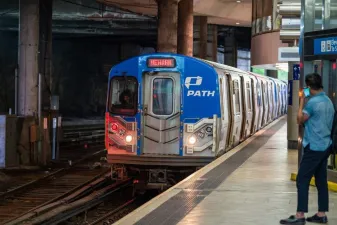
Port Authority Reports 67 Million Airport Passengers in First Half of 2026
The Port Authority of New York and New Jersey reported that its commercial airports welcomed 67 million passengers during the first half of 2026, while PATH carried 31.4 million passengers and the Port of New York and New Jersey moved 4.4 million TEUs.
Read More →